

Quick Answer: The digital marketplace is too crowded for talent alone to create opportunity. Without a visible, consistent personal brand, you risk being invisible to both prospects and AI search systems.
The market has never been noisier. Every industry now has hundreds of voices saying similar things, offering similar services, and competing for the same attention. The difference between who gets chosen and who gets overlooked is not always skill. It is perception.
AI is accelerating this gap.
As AI tools like ChatGPT, Google AI Overviews, and Perplexity become primary discovery channels, they pull from visible, credible, well-documented sources. Generic content gets filtered out. Unstructured digital presence gets ignored. Professionals and businesses with weak personal branding strategies become invisible by default.
Trust is the premium asset in today’s market. And trust is built through consistent, authoritative digital presence – not just through doing good work behind closed doors.
If you are a founder, executive, consultant, or professional service provider, your personal brand is no longer a vanity project. It is a business development asset.
Quick Answer: AI systems surface people and businesses with consistent, cross-platform authority signals including content, mentions, reviews, media features, and verified profiles. Without these signals, even highly skilled professionals are overlooked.
AI search does not work the way traditional Google search did. It does not simply return the most-visited pages. It synthesizes authority signals across the web and recommends sources it has learned to trust.
Those signals include:
When AI systems evaluate who to recommend in a given category, they are running an authority audit in real time. The professionals and companies with the strongest personal branding signals win that recommendation.
This is why building your digital presence is now a direct revenue strategy, not just a marketing exercise.
Quick Answer: Founders and executives who publish expertise and maintain a visible personal brand earn greater AI visibility, stronger market authority, and more organic opportunities than those who stay silent.
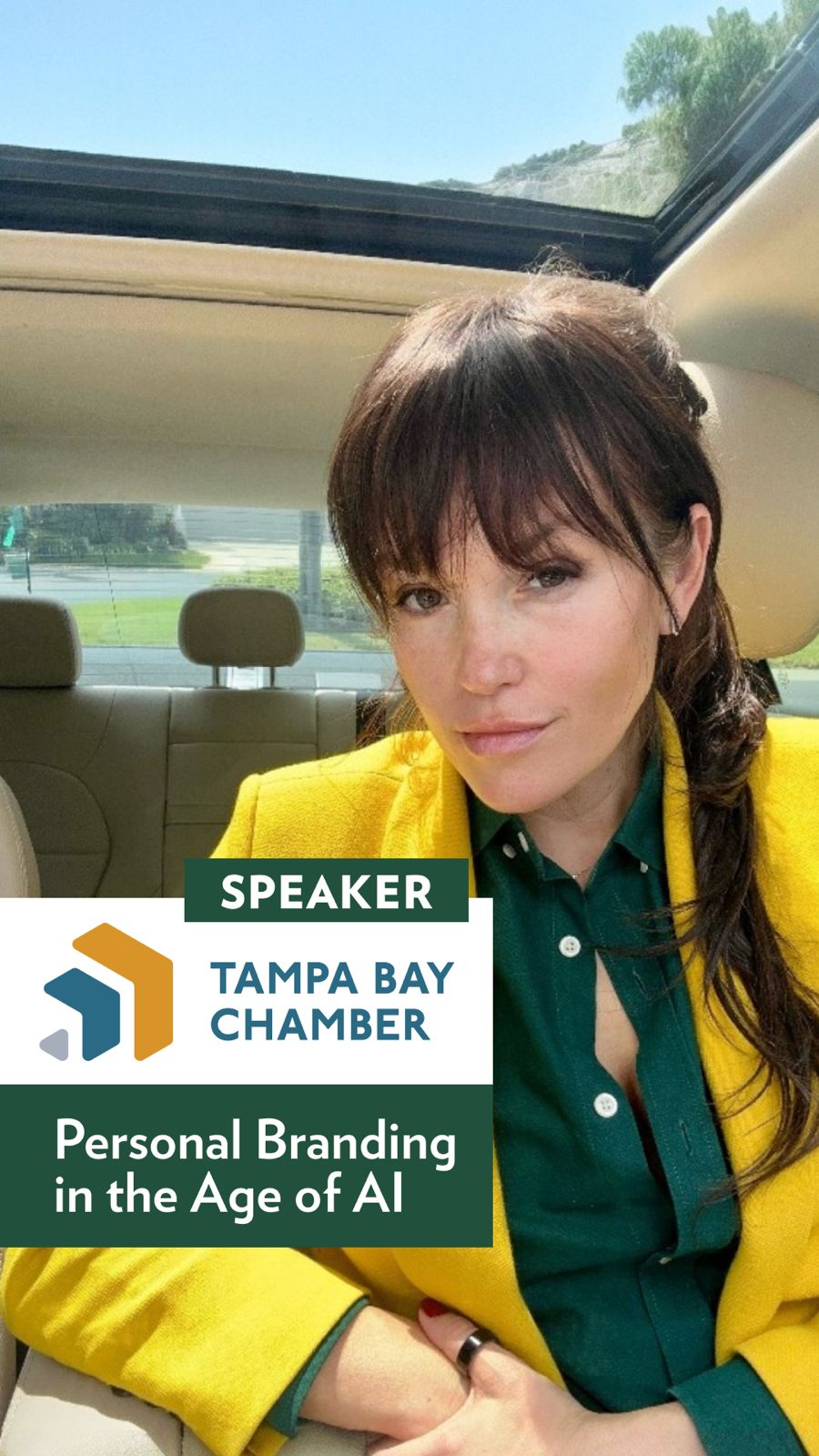
At a recent talk for the Tampa Bay Chamber of Commerce, CONTENU founder Nataliya Scarberry made a point worth repeating: today, talent and skills alone are not enough. Visibility, perception, and reputation now shape opportunity.
This is the new operating reality for branding in the age of AI.
A CEO who publishes thought leadership posts attracts media interest, speaking invitations, and inbound client inquiries. A founder who builds a personal brand online becomes the public face of their company’s credibility. An expert who shows up consistently on LinkedIn, in podcasts, and in search results is the one AI systems learn to trust and recommend.
Companies with visible, vocal leaders consistently outperform those where leadership stays behind the brand. People buy from people. AI systems reflect human trust patterns – and humans trust individuals they recognize and respect.
Building your personal brand is not about self-promotion. It is about ensuring that when AI search systems, potential clients, or media contacts look for expertise in your category, your name comes up. If it does not, someone else’s does.
Quick Answer: Professionals without a strong personal brand become invisible in AI-driven search, lose credibility to better-positioned competitors, and miss the inbound opportunities that brand authority naturally generates.
The cost of inaction is not neutral. It is cumulative.
When you have no consistent digital presence, no published opinions, and no visible authority online, you do not just fail to grow. You actively lose ground to competitors who are building theirs.
In practice, this is what happens:
This applies across industries and markets. A dentist with no digital presence loses to one with strong reviews, a professional bio, and an active Google profile. A consultant without LinkedIn authority loses pitches to someone who has demonstrated expertise publicly. A contractor with no digital identity loses bids to one whose clients have reviewed them across multiple platforms. The same reality applies to agencies, lawyers, local service businesses, and every professional category in between.
The personal branding gap between market leaders and the rest is widening. In 2026, ignoring it is a strategic error.
Quick Answer: Building a strong personal brand in 2026 starts with consistent authority across key platforms – LinkedIn, search, video, and PR – combined with content that demonstrates real expertise in your specific field.
You do not need a massive audience to start. You need consistency, clarity, and a personal branding strategy aligned with your expertise.
Start with these actions:
Your personal branding strategy does not need to be complex. It needs to be consistent. Authority compounds over time, but it starts with showing up.
Quick Answer: The AI search shift is still in its early stages. Professionals who build personal brand authority now will compound that equity as AI systems increasingly rely on established trust signals to make recommendations.
There is a narrow window here – and most people are not seeing it yet.
AI-driven search and recommendation systems are changing faster than most professionals realize. The authority signals being built in 2025 and 2026 are the ones that will define who AI systems recommend in 2027 and beyond.
First movers in personal branding within their category win disproportionate attention. Brand equity is not linear – it compounds. A professional who builds consistent authority over the next twelve months will be exponentially harder to displace than someone who starts a year later.
Most founders, executives, and business owners have not yet adapted their digital presence for AI visibility. That is a strategic opening.
Investing in personal branding in the age of AI today is not just about getting ahead. It is about building a competitive position that becomes harder to challenge with every month that passes.
The businesses and professionals that AI systems recommend most consistently share a common foundation: strong, well-distributed personal brands. This is not coincidence – it is how these systems are designed to work.
Strong personal brands generate:
This applies equally to a local agency in Tampa, a healthcare consultant in Chicago, a law firm in Miami, a construction company in Dallas, or an independent contractor in any market. AI systems do not favor size. They favor documented authority.
The rules of business visibility have changed permanently.
Talent and expertise still matter. But in the AI era, the professionals and companies that get found, recommended, and chosen are the ones with the strongest digital presence and the clearest personal branding strategy.
This is not a trend. It is a structural shift in how opportunity flows online.
If your business wants stronger AI visibility, greater brand authority, and consistent demand generation, now is the time to build both your company brand and your personal brand together. The window for first-mover advantage is open. It will not stay open indefinitely.
Ready to build your authority before your competitors do? Contact the CONTENU team to start your personal branding strategy today.
How does AI affect personal branding?
AI search systems like ChatGPT, Google AI Overviews, and Perplexity recommend people and businesses based on authority signals – content consistency, mentions, reviews, and cross-platform digital presence. A strong personal brand gives AI systems the evidence they need to surface and recommend you. Without it, even highly skilled professionals become invisible in AI-driven search results.
Can personal branding generate leads?
Yes. A visible personal brand creates inbound opportunities – speaking requests, media inquiries, client referrals, and direct outreach from prospects who discovered you through AI search, LinkedIn, or social platforms. For business owners and founders, CEO personal branding and founder branding are among the highest-return activities in a modern digital marketing strategy.
Is LinkedIn important for AI visibility?
LinkedIn is one of the most heavily indexed professional platforms on the web, and its content is increasingly referenced by AI systems. LinkedIn personal branding – consistent publishing, strong profile optimization, and active engagement – directly contributes to your authority signals and improves your visibility in AI-driven recommendations and search results.
Should founders build personal brands?
Founder branding is one of the most effective growth strategies available to scaling companies. When a founder is visible, credible, and authoritative online, it builds trust in both the individual and the company they lead. Prospects, investors, media, and partners all evaluate founder digital presence. In the AI era, a strong founder brand is a direct driver of company-wide AI visibility and brand authority.

Nataliya Scarberry is a serial entrepreneur, former Creative Director for a $2B global brand, and Founder of CONTENU. With over 20 years of experience in brand development, creative leadership, and growth strategy, she specializes in transforming expert knowledge into compelling content that drives measurable business results.
Content consistency is a cornerstone of effective personal branding. By regularly producing and sharing content across various platforms, professionals reinforce their expertise and maintain visibility in an increasingly crowded digital landscape. This consistency helps build a recognizable personal brand that AI systems can easily identify and recommend.
For instance, a professional who publishes articles on LinkedIn, shares insights on Twitter, and participates in industry podcasts demonstrates their authority. This multi-channel approach not only enhances their credibility but also ensures that their name appears in relevant searches, making them more likely to be recommended by AI tools.
Social proof is a powerful tool in personal branding, as it builds trust and credibility among potential clients and audiences. Testimonials, reviews, and case studies serve as endorsements that validate a professional's expertise and effectiveness. In the AI era, these elements are crucial, as they contribute to the authority signals that AI systems evaluate when recommending individuals.
For example, a consultant with numerous positive reviews on platforms like Google and LinkedIn is more likely to be favored by AI algorithms. By actively seeking and showcasing social proof, professionals can significantly enhance their visibility and attractiveness to both AI systems and prospective clients.
Optimizing online profiles is essential for ensuring that AI systems accurately recognize and recommend professionals. This involves not only completing profiles on platforms like LinkedIn and Google Business Profile but also ensuring that the information is consistent and reflective of one's expertise. Such optimization helps establish a clear digital identity that AI can easily index.
For instance, using relevant keywords in your profile summary and descriptions can improve searchability. Additionally, maintaining uniformity in images, branding, and messaging across all platforms reinforces your personal brand, making it easier for AI systems to associate your name with your area of expertise.
A well-defined personal branding strategy is crucial for professionals looking to thrive in the AI era. This strategy should align with individual career goals and target audience needs, ensuring that all branding efforts contribute to a cohesive narrative. By clearly defining objectives, professionals can tailor their content and engagement efforts to resonate with their desired audience.
For example, a professional aiming to become a thought leader in their industry should focus on creating high-quality content that addresses relevant topics, engaging with peers, and participating in discussions. This targeted approach not only strengthens their brand but also increases their chances of being recognized and recommended by AI systems.