


Content marketing for roofing companies in Tampa works when it does three jobs at once. It builds trust with storm-wary homeowners, ranks you for the neighborhoods you actually serve, and captures urgent demand after a storm. We’re CONTENU, a Tampa Bay digital marketing agency, and this is the plan we’d hand a local roofer who wants a steady pipeline instead of a feast-or-famine storm cycle.
Key takeaways
Content should work as a trust-and-visibility system that runs all year, with storm season as the peak.
- Local SEO and a well-run Google Business Profile are the foundation, and neighborhood pages extend it.
- Storm-prep and insurance-documentation content meets Tampa’s weather-driven demand when it spikes.
- Video (drone flyovers, before-and-after walkthroughs, crew clips) earns trust faster than text.
- Track cost per signed contract alongside cost per lead, so you know which content pays for itself.
Why content marketing matters for Tampa roofers
Tampa roofers rarely lose jobs on price alone. They lose on trust and local relevance.
A homeowner staring at a ceiling stain after a summer squall is choosing between a dozen trucks and a wall of five-star claims, and content is how you answer their questions before a competitor does. Useful local content positions your company as the expert, teaches homeowners how to prepare for storms, and keeps you visible the moment demand spikes. In a crowded, weather-driven market, that decides whether you blend in or become the name people call first.
Key benchmarks for roofing marketing in Tampa
Real numbers should anchor your plan before you spend a dollar. Construction Marketing Partners reports Tampa roofing benchmarks for 2026 of $63 to $231 per lead, an average Google Ads cost per click of $11.69, and conversion rates of 6% to 8%.
The same source puts typical project values at $6,000 to $30,000 and recommended marketing budgets at 8% to 12% of revenue. Those figures turn vague goals into targets. A roofer billing $1,000,000 a year, for example, would plan $80,000 to $120,000 for marketing at that range.
Now run the math on your own numbers. Say a signed replacement is worth $12,000 and a lead costs you $150. A 6% conversion rate means roughly 17 leads for every signed job, so one contract costs you near $2,500 in lead spend. Set that against the $12,000 project and the budget question mostly answers itself. If your cost per lead sits near the $231 top of the range, the same conversion rate pushes one contract past $3,800, and that’s the signal to fix your pages before you buy more clicks.
Local SEO essentials for Tampa roofing companies
Most roofing searches in Tampa are local and urgent: “roof repair near me,” “tile roofer South Tampa.” Local SEO is the work of showing up for those searches, and for a roofer it starts with your Google Business Profile, the listing that feeds Google Maps and the local pack.
Fill in every field. Add geo-tagged photos of recent jobs, post updates, and keep your name, address, and phone number identical across every directory and citation. Name the neighborhoods you serve in your page copy, from Hyde Park to Brandon.
Google weighs three factors in local results: relevance, distance, and prominence. You control relevance and prominence through accurate information, real photos, and a steady flow of fresh reviews. Distance is the one factor you handle by choosing which neighborhoods to target.
If you also want a site built to carry those pages, our web development team builds them with local search in mind.
Tampa-specific content ideas: storm season and beyond
The calendar is your content strategy. The Atlantic hurricane season runs from June 1 through November 30, so a guide published in late spring is ranking right when Tampa homeowners start searching.
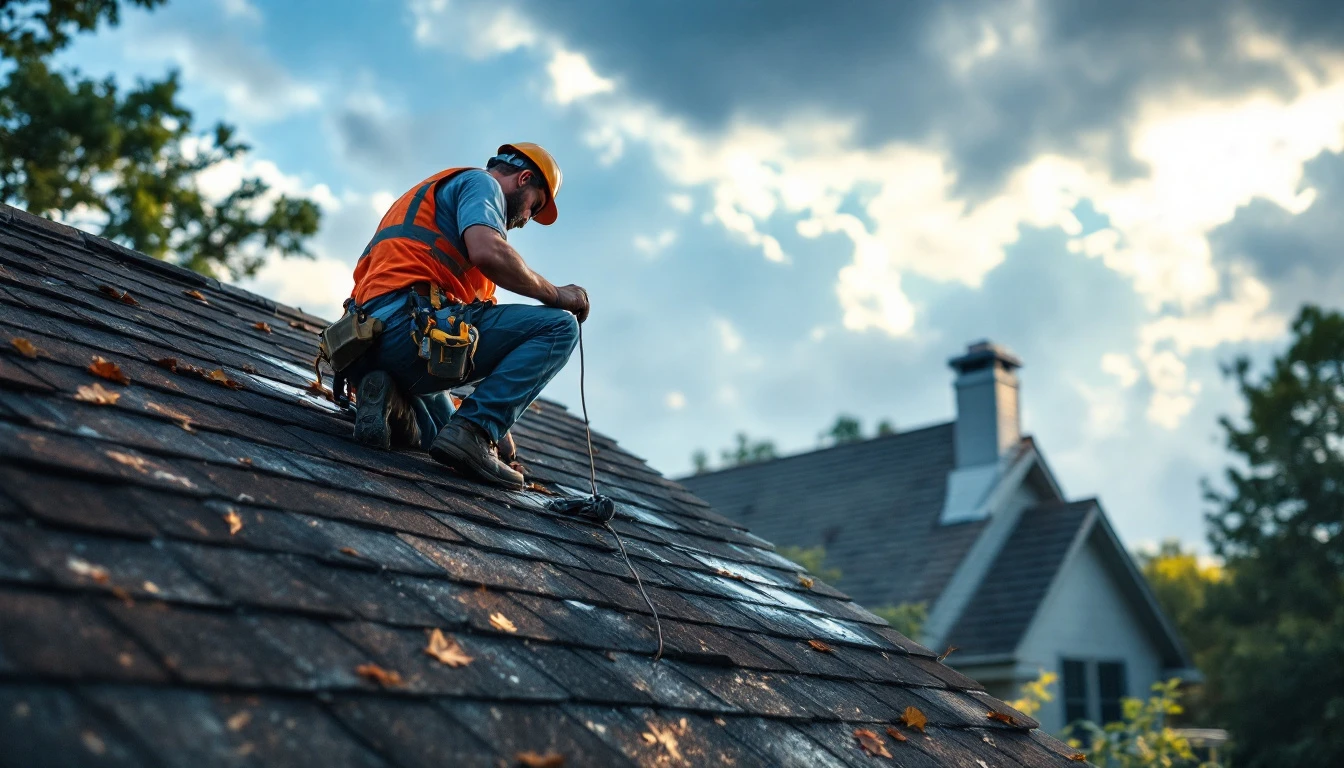
Write what people need. Explain how to inspect a roof before a storm. Spell out what a Florida wind mitigation inspection is. Walk through how to document damage for a legitimate insurance claim: dated photos, a written timeline, and copies of every estimate. After a storm passes, publish fast on what homeowners should do first, while searches for emergency roof repair in Tampa are still climbing.
Beyond the storm calendar, material and climate pieces hold steady traffic all year. “Tile vs. Metal Roofs in Tampa’s Heat and Humidity” and “How Long Do Shingle Roofs Really Last Under the Florida Sun?” answer questions homeowners in Hillsborough County ask long before a storm forms.
Timely, local content captures urgent demand and gives your company the steady voice of a neighbor who will still be around next season. Our content creation service covers this kind of seasonal publishing.
Hyperlocal content: neighborhood and submarket pages
A single citywide service page loses to searches tied to specific communities.
Build dedicated pages for the areas you work, such as Hyde Park, South Tampa, West Tampa, New Tampa, Brandon, and Riverview, and tailor each to how homes there are built. Barrel tile, concrete tile, metal, and steep asphalt shingle each suit different housing stock, so write to what your crews actually install in each area. Add real project photos from that neighborhood, mention nearby landmarks, and answer the questions a homeowner there would ask. Pages like these signal a genuine local presence to Google and to the person reading.
The power of video marketing for Tampa roofers
Seeing your crew work on a roof like theirs does more for a skeptical homeowner than any paragraph.
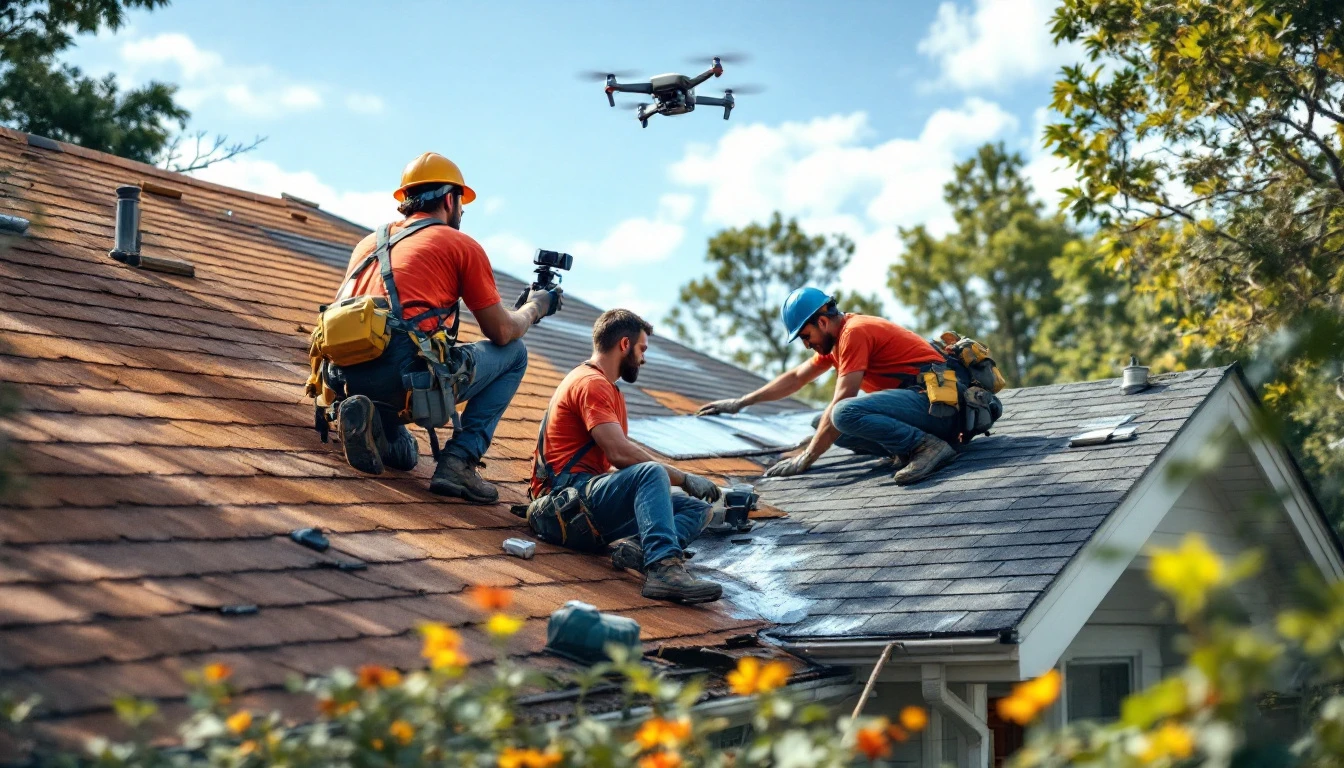
Solvis Media, a roofing marketing agency, reports that its video-first approach delivered an 80% increase in online conversions and 2x response rates from leads for its roofing clients. Those are the agency’s own client figures with no independent audit behind them, so use them as a directional signal and set your own targets from your call-tracking data.
Video doesn’t need a studio. A 60-second drone flyover of a finished replacement shows competence that copy only claims. A before-and-after walkthrough does the same job, and so does a short clip of your team doing careful nail cleanup. Post these as YouTube Shorts and Instagram Reels, then embed the same clips on your neighborhood pages so each page carries local proof.
An owner-led origin story earns a place in the mix. A Porter Media case study of Certified Roofers, a Tampa Bay roofing company, describes a brand origin film plus recurring short videos that left customers feeling familiar with the company’s representative before they ever met him. A homeowner who feels they already know you is more likely to call.
Our social media marketing work covers the short-form side of this, from planning to posting.
Turning content into leads: what works in Tampa
Traffic with no next step is a vanity metric. Lead-generating content gives homeowners a reason to act now and an easy way to do it: a downloadable hurricane-prep checklist, an instant estimate form, and a clear “book a free inspection” button on every page.
Pair your best pieces with Google Search Ads and Local Services Ads, so someone searching “emergency roof repair Tampa” finds you twice, once organically and once at the top of the results. Here is how we’d connect content with paid ads: organic pages build the trust, and ads put them in front of high-intent searchers. With Tampa’s average Google Ads click costing $11.69, every paid click should land on a page built to convert.
Organic work compounds over time. Built-Right Digital reports that a Houston roofing client ranked in the top 3 for 37 keywords and the top 10 for 210 keywords. The result comes from one agency’s own report in a different market, so it shows what sustained local content produces and says nothing about how fast Tampa will move for you.
Measure cost per signed contract, because ten cheap leads that never sign cost more than three that do.
Earning trust: reputation and reviews in the Tampa market
Reviews are the currency of trust in roofing. Make asking for a Google review the last step of every job, and answer each one, glowing or critical, so prospects see a company that stands behind its work. Back that up with before-and-after photos and the names of the local suppliers or associations you work with. A homeowner comparing three roofers will usually choose the one whose proof is specific, recent, and clearly from Tampa over the one making the biggest promises.
Content formats that work for Tampa roofers
Four formats carry most of the weight. Blog posts that answer real questions, such as how long a shingle roof lasts under Florida sun, capture search intent. Short-form video builds trust. Storm-prep guides and inspection checklists give homeowners something to keep. Neighborhood landing pages tie everything to the places you serve. Choose a format only if it solves a homeowner’s problem or proves your expertise. If it just fills a posting calendar, skip it. For a look at how we approach construction clients, see our Ria Construction case study.
How to measure content marketing ROI for Tampa roofing companies
Three numbers matter most: cost per lead, conversion rate, and cost per signed contract. Put a unique call-tracking number on each campaign, log every form fill, and compare results monthly against the Tampa benchmarks above to see whether a channel earns its budget. Tie content to revenue. A blog post that ranks is nice, and one that books inspections is the one to repeat.
How we put this blueprint together
We built this blueprint as a recommendation, and we did not run a study to produce it. It draws on three inputs: the published Tampa benchmarks above, the June 1 to November 30 storm calendar the National Hurricane Center publishes, and how local homeowners search for and choose a contractor.
CONTENU works with local construction companies on branding, content creation, SEO, social media marketing, and paid ads, and this plan reflects that integrated approach. It’s Tampa-specific on purpose. Generic roofing advice ignores hurricane season, Florida insurance realities, and the neighborhood-by-neighborhood way people here pick a roofer.
Adapt the pieces to your crew size and service area, and begin with the one closest to revenue. If you’d like help sequencing them, talk to our team.
Frequently asked questions about content marketing for Tampa roofers
What is the best marketing for a roofing company in Tampa?
The strongest approach combines local SEO, a fully optimized Google Business Profile, storm-prep and insurance content, video testimonials, and a steady stream of Google reviews. Together they build homeowner trust, capture weather-driven demand, and keep you visible in local search all year.
How can Tampa roofing companies use content to generate more leads?
Publish neighborhood pages, storm-prep checklists, and video proof, then give every page a clear next step like booking a free inspection. Promote your best pieces with Local Services Ads, and track results with call-tracking numbers and forms so you know what converts.
What content topics are most effective for Tampa roofers?
Storm preparation, pre-season roof inspections, wind mitigation and insurance claims, Florida material guides (tile versus metal versus shingle), and local project showcases. These match what Tampa homeowners search for and show you understand the city’s weather and building styles.
How do Tampa roofing companies build trust with homeowners?
Display recent Google reviews, publish before-and-after photos and crew videos, respond to every review quickly, and name the local suppliers and neighborhoods you work in. Specific, verifiable proof carries more weight than big promises.
How should Tampa roofers measure content marketing success?
Track cost per lead, conversion rate, and cost per signed contract. Use unique call-tracking numbers and form submissions, then review performance monthly against Tampa benchmarks so each piece of content ties back to revenue.
When is the best time to publish storm-prep content for Tampa roofing companies?
Publish in late spring, before hurricane season opens on June 1. Early content has time to rank, so your guides are already visible when homeowners begin preparing and searching in June.